
School of Electrical and Electronic Engineering

Program Overview

From smartphones and medical imaging devices to automotive control units and internet-of-things (IoT) ecosystems, modern life runs on hardware circuitry. The Electronics program at ISEST is a technical engineering discipline focused on the design, analysis, and fabrication of advanced electronic circuits and computerized hardware.


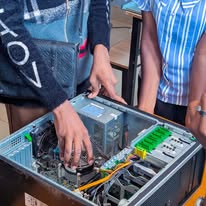
This program goes far beyond simple device troubleshooting, training students in solid-state physics, circuit theory, and assembly micro-programming. Enrolling at the HND level and progressing to a B.Tech, students work in testing laboratories equipped with digital oscilloscopes, spectrum analyzers, and PCB (Printed Circuit Board) prototyping stations. They learn to design custom circuit architectures, program microcontrollers, and interface sensors for real-world automation. Graduates emerge as hardware engineering professionals capable of designing consumer tech, developing industrial instrumentation, or working in aerospace electronic systems.
Main Objectives

  • To develop expert proficiency in circuit simulation, PCB layout drafting, and hardware prototyping using industry-standard CAD tools.
  • To train students in programming embedded microcontrollers (such as ARM, AVR, and Arduino) using C and Assembly languages.
  • To train students in programming embedded microcontrollers (such as ARM, AVR, and Arduino) using C and Assembly languages.
  • To build skills in analyzing and calibrating communication circuits, wireless transceivers, and high-frequency signal processing units.
  • .To equip graduates with advanced diagnostic, failure-analysis, and component-level soldering techniques.

Main Objectives

2 Years

HND in Electronics

1 Year

BTech in Electronics

Internship

Included at both levels

Study Options

Full-time / Part-time / Evening

Skills Acquired

Graduates of the program will be proficient in:

  • Hardware Circuit Design: Designing stable analog filtering stages, switching power supplies, and digital logic gates.
  • PCB Prototyping & Layout: Mapping multi-layer schematics and routing traces safely using digital CAD suites like Proteus, Altium Designer, or KiCad.
  • Embedded Programming: Writing low-level firmware code to read sensor data, drive displays, and control mechanical actuators.
  • Signal Processing & Diagnostics: Utilizing logic analyzers, signal generators, and oscilloscopes to trace faults, measure noise, and isolate component bugs.
  • Micro-Soldering & Assembly: Executing surface-mount technology (SMT) and through-hole soldering adjustments under high-magnification microscopes.
  • IoT & Wireless Interfacing: Implementing Bluetooth, Wi-Fi, and LoRa communication modules into smart, networked hardware nodes.


Target Audience

  • Baccalauréat/A-Level graduates with strong aptitude in mathematics and physics, and a deep curiosity about how hardware devices think.
  • Technicians or repair hobbyists looking to upgrade from basic component replacement to advanced hardware architecture engineering.
  • Aspiring inventors, roboticists, and tech product developers who want the skill to design their own physical computing products.
  • Industrial maintenance personnel wanting a specialized edge in managing complex electronic controls and instrumentation panels.


Career Opportunities

Graduates can pursue roles such as:

  • Electronics Design Engineer
  • Embedded Systems Firmware Developer
  • Hardware Prototyping Specialist
  • Instrumentation & Calibration Technician
  • Avionics / Automotive Electronics Tester
  • Quality Assurance (QA) Hardware Inspector
  • Independent Electronic Systems Consultant


Opportunities for Further Studies

  • Master’s degrees in Electronic Engineering, Embedded Systems Design, Microelectronics, Robotics & Mechatronics, or Telecommunications.
  • Professional Certifications in:
    • IPC-A-610 Certified Electronics Inspector (Acceptability of Electronic Assemblies)
    • Certified Embedded Systems Engineer (CESE)
    • LabVIEW Certified Associate Developer (CLAD)
    • Project Management Professional (PMP)


Innovate. Program. Connect.

Control the core architecture of modern technology. From micro-scale sensors to smart automated infrastructure, design the physical hardware systems of the future with the Electronics program.